
Introduction
Today we generally call them ganseys, but they are also known as guernseys or jerseys; jumpers or sweaters worn as work-wear linked to sea-faring, notably shipbuilding or fishing. Research [3] shows they were worn by fishermen from the late 1800's to the mid-20th century.
Gladys Thomson asserts that they came from the Channel Islands of the same name [1], and notes the main differences between Guernseys and Jerseys lie in the yarn (dark blue for guernseys, more colours for jerseys), and the weight of jerseys being thinner. The name also exists in Scottish Gaelic and in Norwegian so the origin of the name is not clear.
Regardless of what you call them, ganseys are single-colour garments, crafted by wives, sisters, mothers daughters and the crew of women who followed the fishing fleets around the coasts to prepare the catch for market (also known as the Herring Girls). Interestingly, is it also now known that the women made these garments for themselves, as ganseys in pink, pale green and raspberry colours have been discovered [2].
All about Ganseys
About Ganseys
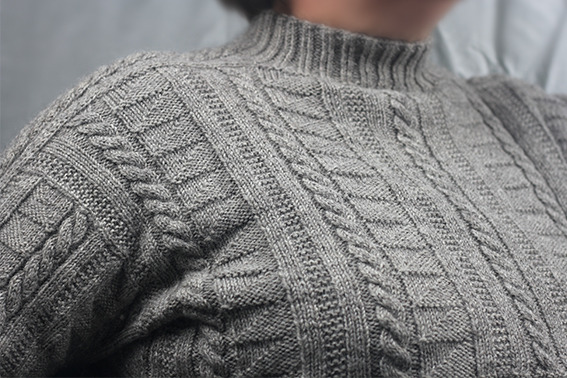
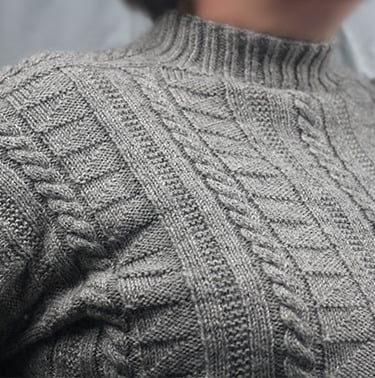
They were designed to be a warm, close-fitting and hard-wearing garment. They are traditionally knit using 100% wool, on 2-2.75mm long-length double-pointed needles. Pre-dating lovely pre-made needles or perhaps a necessity due to cost, steel wires were used, with the needle points created by grinding the ends on stone. The small needle size and highly twisted yarn produces a garment with a close weave, which is water-repellent and helps regulate body temperature. Perfect for fishermen.
Ganseys were not just working garments, they were also a respectable form of dress for special occasions, including Sunday services and formal family photographs.
They were also not knitted solely for family members; as times changed, women were later employed by larger companies to produce hand-knitted ganseys as part of a network of skilled knitters. The yarn was delivered and the knitted items taken away by the knitting agent. This was an important source of income for women, whose husbands may have sought work elsewhere in the country or even overseas.
Including
The Anatomy of a Gansey
Components of a (traditional) gansey
It is the design and construction of a gansey which makes them unique as a garment and defies the creation of a 'standard' pattern to cover them all. Each of the traditional components which go into making a gansey can be individualised, before even starting to bring in the multitude of motifs which make up the main body of the gansey and can extend to the sleeves also. They are knit-to-fit and the stitch counts are calculated for each individual gansey.
Patterns and techniques were handed down verbally from grandmothers, mothers and aunts to young family members. Girls began to knit at an early age and there was no need for written instructions. Patterns could be representative of an individual area or even family, though knitters also shared techniques as they moved around the coasts with the fishing fleet, and motifs can be seen replicated in different areas. What is known about the patterns today has come from extensive research by a number of individuals and projects (see Motifs and Patterns and References and Further Reading below).
Ganseys are knitted in the round from the bottom up and are a seamless garment. They have a false side seam (with one or more stitches) which flow into an underarm gusset to improve movement for the wearer. To add strength, cuffs were often cast on and cast off with the yarn held double. They are meant to be a snug fit and therefore are knit to fit the individual; this would reduce the chance of the garment getting in the way or catching on anything in the workplace, on land or at sea. They often have shoulder straps, which strengthens this area and the neck is picked up and knitted in the round. The sleeves are picked up and knitted from the shoulder down, with the second half of the underarm gusset decreased back to the seam stitches.
Welts
The bottom cuff of the gansey, sometimes created with the yarn held double for durability. Channel Island guernseys have a unique cast on with a split welt.
Side seams
In order to ensure a strong hard-wearing garment, ganseys were knitted in one piece with no sewn seams. A fake seam was created to give the illusion of a seam. They are normally comprised of one or two purl stitches at each side of the body, and worked around the gusset then down the sleeve to the cuff.
Gussets
Beginning part-way up the main body and increasing to form a triangle -shape at the underarm, the stitches are decreased away when the sleeve stitches are picked up and knitted from the shoulder to the wrist, resulting in the diamond shape of gussets.
The purpose is to provide greater ease of movement and they have several different constructions. For example, the side seam can continue through the middle or go around the gusset, joining up again to a single seam when the gusset stitches are decreased in the sleeve construction. They are normally plain (stocking stitch), but can contain initials, or be patterned, depending on the desires of the knitter or wearer.
Shoulder straps
These join the front to the back and can be created in the same direction as the front/back, or be knitted from the neck to the shoulder. Either way, they are not sewn in, but are knitted as an integral part of the garment. They often have motifs to reflect the motifs in the garment, and if knitted from neck to shoulder, the motif can flow straight into the sleeve stitches.
Necklines
Round, funnel, buttoned - there are a few different types of neckline common to ganseys. Scottish and Whitby ganseys most often had three button necks. Necks may also have small gussets at the join between the neck and the shoulder strap.
Sleeve length
Sleeves were often knit slightly short, to ensure they did not interfere with the work of the wearer. Today, however, as most ganseys are knitted for regular usage, sleeves are knit the length the wearer requires.
Motifs and patterns
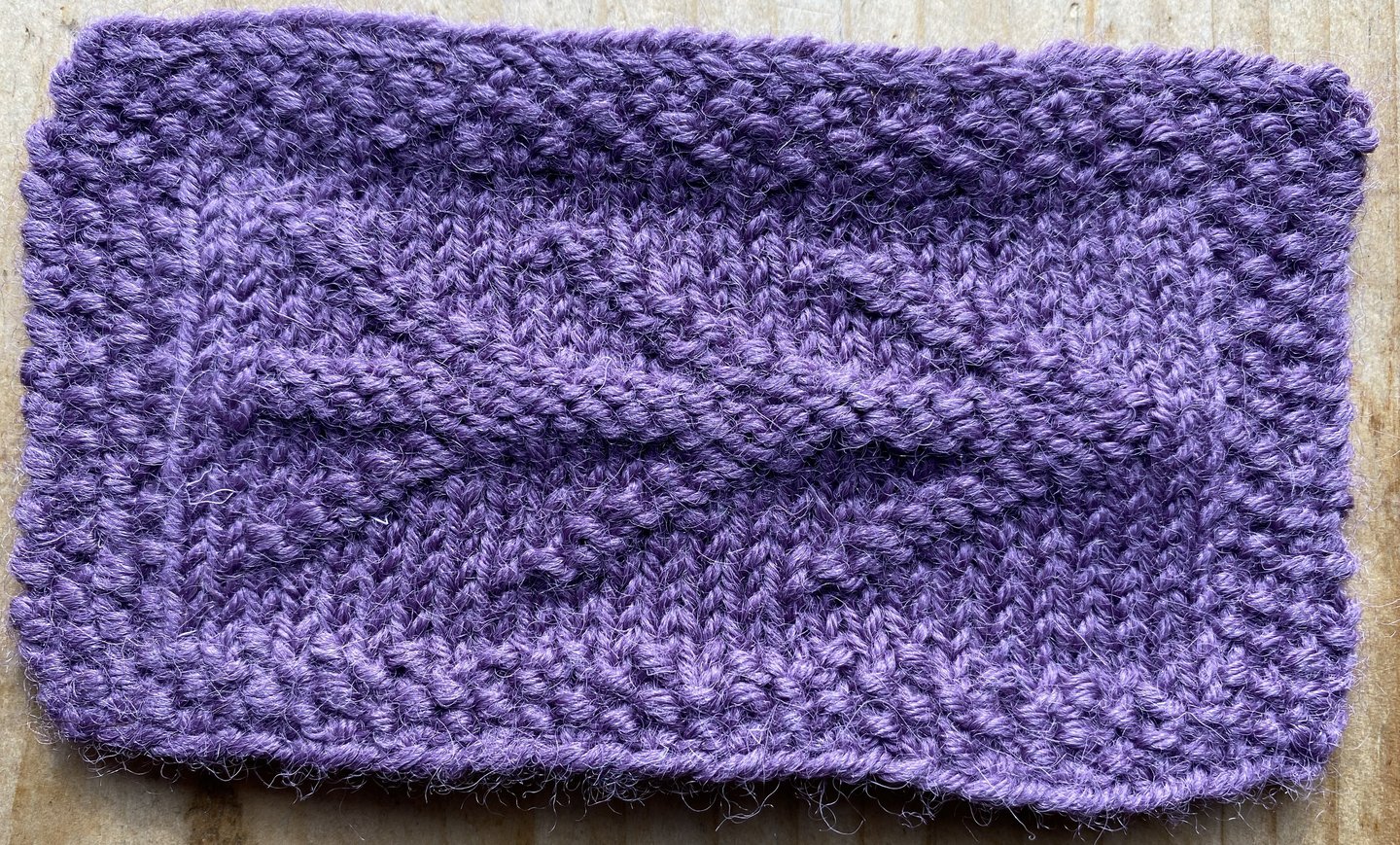
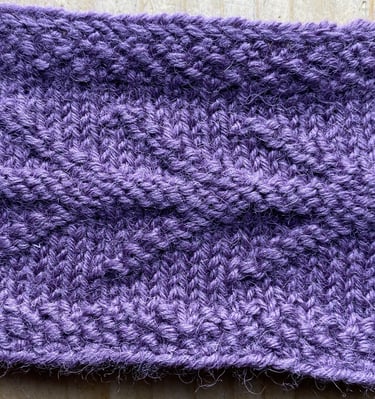
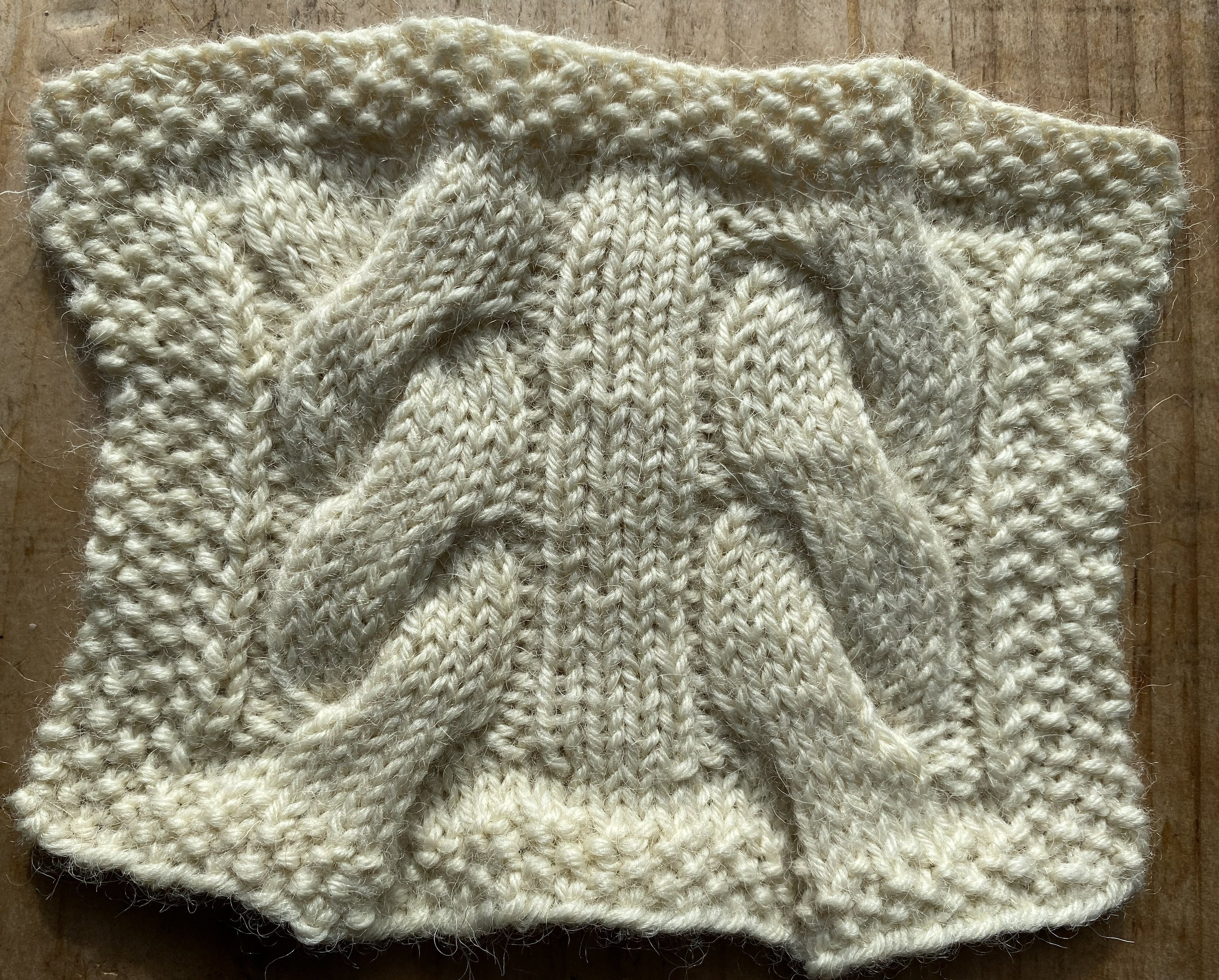
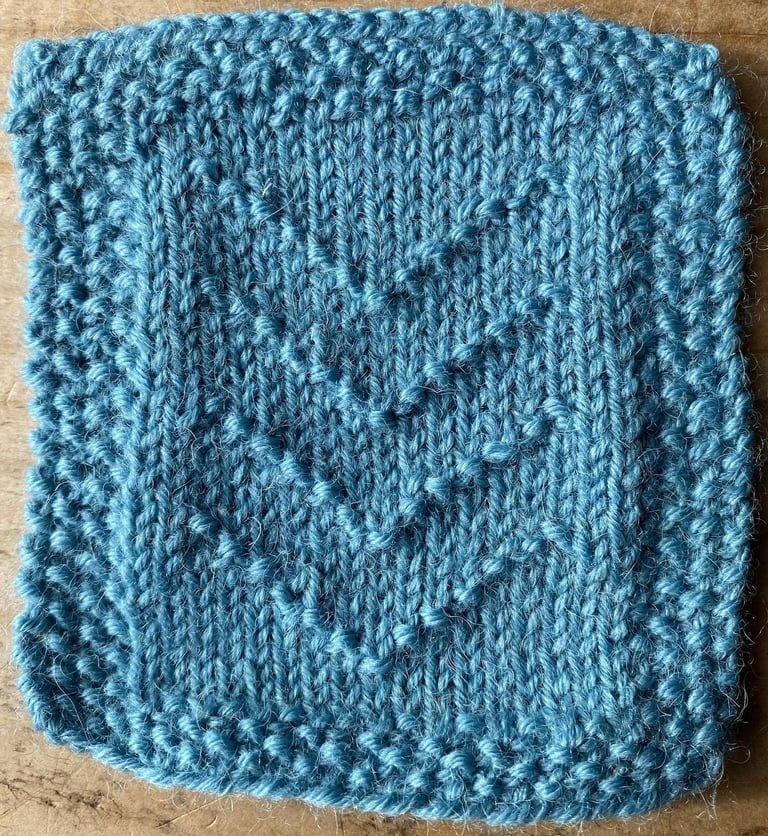
The motifs and patterns often have names related to sea-faring, such as rope, ladder, diamonds (mesh of the fishing nets). There are many different stitch patterns and although some are considered to be specific to different areas, and indeed some were more common in some regions that others, the sharing of ideas and patterns as the fishing fleet and the Herring Girls moved around the coast, meant that the same motif can be found in multiple regions.
Depending on the gauge and the chest size and arm circumference of the gansey, the motifs/patterns need to be crafted according to the calculated stitch requirement.
We are lucky that several projects have studied local ganseys and have captured the patterns they have found. If you want to know more, these projects are a good place to start:
The Lowestoft Gansey project (Facebook group)
The following two are valid websites, but have not been converted to https sites, so it's your choice whether to seek out and visit them:
Moray Firth Gansey Project
Gansey Nation
Initials
These are not always found in ganseys, so the tale that they were used to identify and return the body of a drowned fisherman is a myth. The ganseys themselves were more likely to identify a fisherman, as they were uniquely made for the individual and no two ganseys were ever likely to be exactly the same [4].
It is interesting to note that Mary Wright only mentions initials in her book when referring to a case where a knitter identified a stolen gansey via the initials she had added in [3]!
Want your own gansey?
If you want your very own gansey, but are not ready to knit one yet, you might want to take a look at Propagansey. Based in Whitby (North Yorkshire), I am one of several knitters who work with Deb to create fabulous commissioned ganseys!
References and further reading...
Gladys Thomson, Patterns for Guernseys, Jerseys & Arans (Dover Publications)
Mary Wright, Cornish Guernseys & Knit Frocks (Polperro Heritage Press)
Also
Michael Pearson, Traditional Knitting: Aran, Fair Isle and Fisher Ganseys (Dover Publications)
Beth Brown-Reinsel, Knitting Ganseys (White River Press)
Di Gilpin and Sheila Greenwell, The Gansey Knitting Sourcebook (David Charles)
I'm glad you've found The Wrinkled Thistle.
This page is currently undergoing a makeover and will look fabulous again soon.
If you want to know more about The Wrinkled Thistle, have a chat, be first to know about new developments and promotions, head over to our Newsletter sign up page.
If you just want to look around and find out what we're all about, our Home page is a good place to start.